




In 2026, the WAEC achieved a pass rate of 61.54 per cent and withheld 167,486 results over suspected examination malpractice.
On Wednesday, the West African Examinations Council (WAEC) released the results of the 2026 Computer-Based West African Senior School Certificate Examination (CB-WASSCE) for school candidates, and 1,200,514 of them, 61.54 per cent, secured credits in at least five subjects, among them English Language and Mathematics.
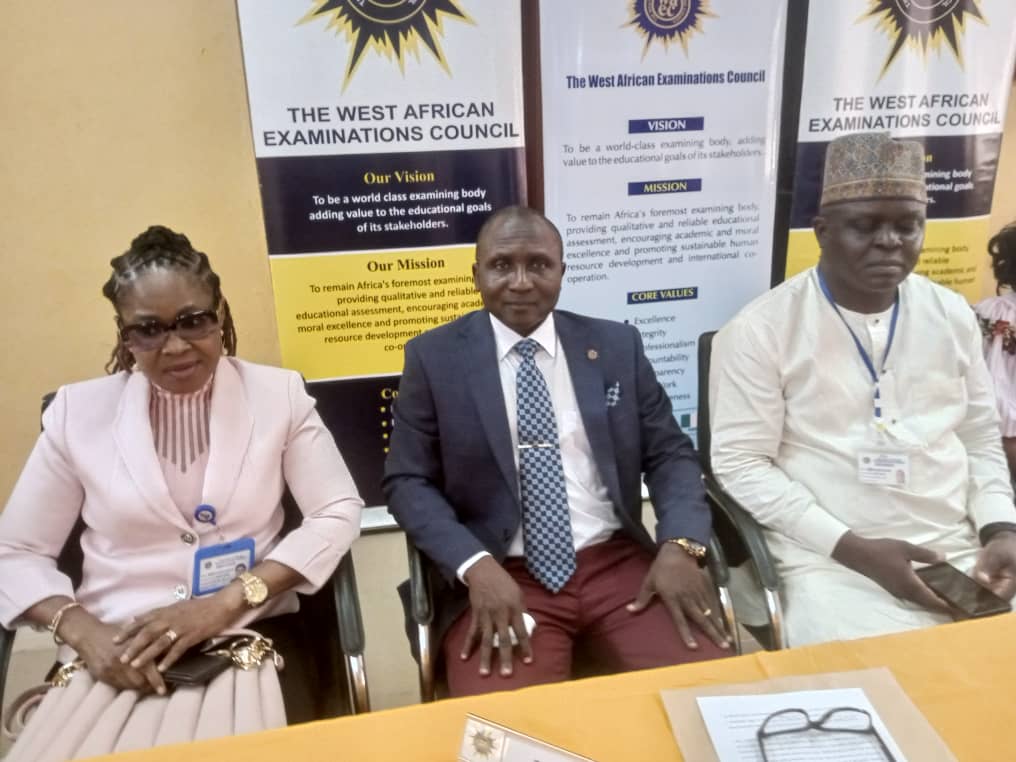
When briefing the journalists in Lagos, Dr. Amos Josiah Dangut, who is the Head of the Nigeria National Office (HNO), said that the figure shows a decline of 1.42 percentage points as compared with the figure for 2025.
He stated that the number of candidates who took the exam was 1,950,726, out of the 1,959,668 who had registered from 24,207 schools in Nigeria as well as some schools in the Benin Republic, Côte d’Ivoire and Equatorial Guinea which were running the Nigerian curriculum.
An examination of the candidates’ performance revealed that 1,687,378 of them, which is 86.50 per cent, achieved credit passes in at least five subjects, whether or not English Language and Mathematics were included.
Dangut states that 1,834,695 candidates, amounting to 94.05 per cent, have had their results completely processed and made public, while the results of 116,031 candidates (5.95 per cent) are still being processed because problems are being dealt with.
He assured the affected candidates that steps were being taken to finish the process in a few days.
The HNO also made it clear that the results of 167,486 candidates, which is 8.59 per cent of those who took the examination, had been withheld on the grounds of alleged involvement in examination malpractice.
He observed that the figure is lower than the 9.7 per cent recorded in 2025, which shows a decrease in the number of malpractice cases.
He credited the improvement to the council’s continuous anti-malpractice measures, these including the expansion of computer-based exams, the serialisation of the question papers and the introduction of the Digital Examiner Marking System (DEMS), which has speeded up the processing of results and improved the level of service delivered.
He said that the council has always found ways of tackling examination malpractice, and that the introduction of computer-based exams and other innovations has greatly improved the integrity of the examination process.
Dangut, whose time as Head of the Nigeria National Office will come to an end when the 2026 results are released, referred to the council’s shift to computer-based examinations as a landmark achievement and stated that WAEC had become the first examining body in Africa and one of the earliest globally to administer achievement tests by means of the computer-based method.
He observed that, for the second year in a row, candidates taking the exams were given the choice between sitting the test on a computer and using the traditional pen-and-paper method.
The chief of WAEC, however, said that the administration of the examination was not free from difficulties, citing logistical problems, late registration by schools, rising operational costs caused by inflation, and the activities of rogue websites that promote fake examination materials.
He criticised the activities of dishonest online operators who take advantage of students and parents by selling counterfeit exam questions and spreading misinformation under the council’s name.
He stated that “the council, in cooperation with the security agencies, arrested a number of the perpetrators, and those supervisors and invigilators who were found to be aiding examination malpractice would be subjected to sanctions by the Nigeria Examinations Committee (NRC) and the relevant state ministries of education.”
Dangut also stated that 1,213 candidates with special needs signed up for the examination and were properly looked after.
They also included people who were visually impaired, hearing impaired, physically challenged and other individuals with disabilities, and the results of these candidates have now been published together with those of the other candidates.
To improve access to the results, he announced that WAEC had stopped issuing printed smart identity cards that contained result-checker PINs.
They can now produce their result-checking e-PINs themselves via the council’s digital platform using their National Identification Number (NIN), and digital certificates will be available within 48 hours of the results being released; as for hard-copy certificates, he said they will be ready within 90 days.
He asked governments and school administrators to invest in digital infrastructure by providing functional computer laboratories and a dependable power supply to enable computer-based learning and assessment.
Improving school infrastructure will not only enable a smooth move to digital examinations but also lead to better teaching and learning results in accordance with global best practices.
Dangut also asked the candidates backed by states that owe money to the council to get their governments to pay off the amounts still due so that their results could be released.