

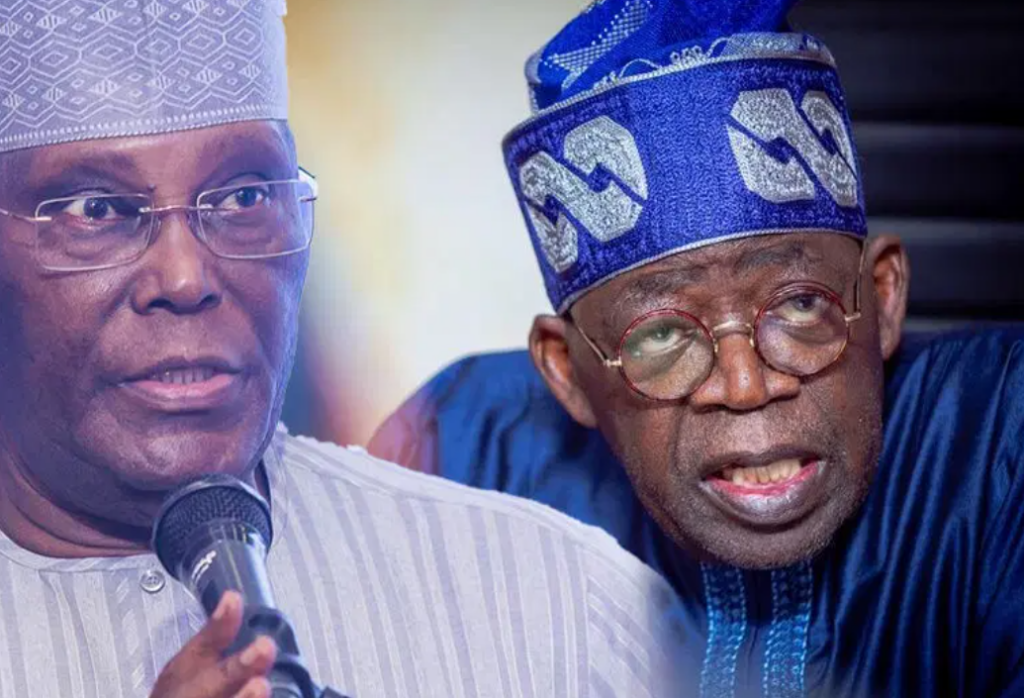
Former Vice President Atiku Abubakar said opposition from President Bola Tinubu and his allies would not stop him from reintroducing targeted fuel subsidies, accusing the administration of disguising the removal of subsidies as reform while granting concessions to oil investors.
The presidential candidate of the African Democratic Congress, Phrank Shaibu, stated in a statement released in Abuja on Sunday by his Senior Special Assistant on Public Communication that President Bola Ahmed Tinubu’s assertion that he has abolished subsidies cannot be reconciled with the fact that tax credits and other incentives are still available to petroleum operators.
Tinubu based his argument on the audited financial statements of the Nigerian National Petroleum Company Limited, noting that the figures contradicted the government’s assertion that the subsidy had ended.
In 2023 the NNPC’s accounts showed energy-security expenses and related shortfalls at approximately ₦4.84 trillion, and in its 2024 audited financial statements energy-security expenses were recorded at about ₦7.13 trillion.
The NNPC stated that this cost is due in part to the difference between the exchange rate used to determine the regulated PMS ex-coastal price and the exchange rate in effect at the time the import obligation is settled. In simple terms, the government was still bearing a price difference after Tinubu had proudly declared that the subsidy was gone, the statement said.
He stated that calling the expense a “shortfall” rather than a subsidy did not alter its essential nature, stressing that Nigerians did not care about the terminology used to describe public money being used to cover the same price gap.
Tinubu stated that Nigerians do not eat semantics; no matter whether the government referred to it as a subsidy, under-recovery, a shortfall, or as relating to energy security, public funds were being used to make up the difference between the economic cost and the selling price of petrol, and you can’t get rid of a subsidy at a public meeting and then bring it back in the accounts under a different name.
also pointed to the Deep Offshore Oil and Gas Projects Incentives framework, under which qualifying petroleum developments can obtain production tax credits of $3 and $4.50 per barrel, as proof that the government was willing to intervene in the market whenever investors stood to gain.
In contrast to that attitude, Atiku claimed that the administration was applying one economic standard to companies and another to citizens.
He said that while the government can guard a multibillion-dollar oil investment against risk, it nevertheless claims that protecting the Nigerian worker from severe hardship is not good economics. However, it can alter policy so that each barrel of crude oil becomes more profitable and taking her children to school more affordable; this is irresponsible.
He referred to his own plan, the Atiku Economic Recovery Plan, as being different from the “opaque and corruption-ridden” subsidy system of previous times, stating that it would include clear limits and oversight.
The statement, together with accelerated domestic refining, competition, mass transportation, and measures aimed at restoring household purchasing power.
Atiku also required the government to make public the details of petroleum tax concessions already granted, specifying who had benefited and how much revenue had been forgone.
It is impossible for a government to advocate unrestrained market forces for the poor while at the same time applying interventionist economic policies to its wealthy foreign friends. It cannot ask the families in Nigeria to make sacrifices while at the same time granting favours to powerful corporate interests. Nor can it offer protection to corporations and impose penalties on citizens, only to call the resulting suffering “reform”. That does not count as economic reform; it is simply classic economic apartheid.