



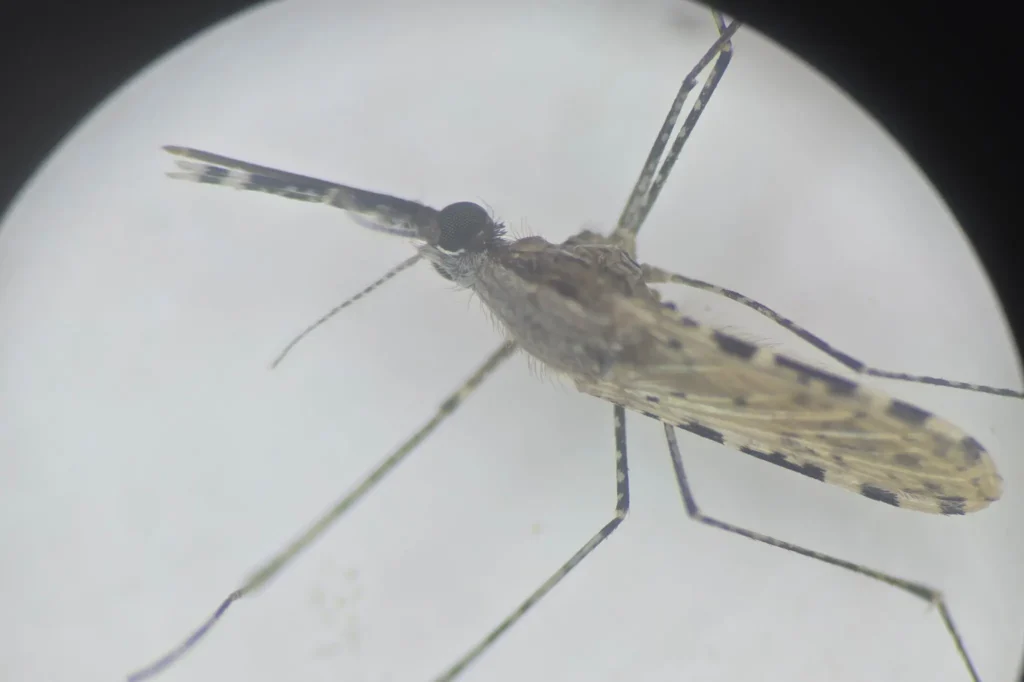
An insecticide-resistant mosquito carrying malaria has spread rapidly into urban areas, exceeding scientists’ worst expectations.
Moreover, many public health experts think it is now too late to both eliminate and contain the mosquito.
A genomic study of the mosquito known as Anopheles stephensi, based on samples collected in 10 countries, has found that the ones in Africa possess genetic resistance to all of the chemicals which are currently used in spraying operations and other measures aimed at controlling mosquitoes, implying that those insecticides will not be able to kill it.
It is advancing with absolutely terrifying efficiency and speed over flat, open, and windy areas, heading west towards Ghana and then south through Kenya, having first reached the continent at Djibouti in the Horn of Africa more than ten years ago.
Tristan Dennis, who carries out research on vector genomics at the University of Queensland in Australia and who was in charge of the new analysis published in the journal Science, said that over the past couple of years there has been less talk about “we really do need to contain this invasion” because everybody who knows what’s what knows that the genie is completely out of the bottle.
Health experts are concerned about this mosquito because, unlike the types that in the past have been responsible for spreading malaria in Africa, it can live in both urban and rural areas and is not put off by dry seasons. As a result, malaria, which is already one of the leading causes of death in Africa, might become a serious issue in large cities such as Lagos and Kinshasa, both of which have a population of about 20 million people.
Dr. Eric Ochomo, who is the head of entomology at the Kenya Medical Research Institute, stated that they have not had to worry about malaria in urban areas.