




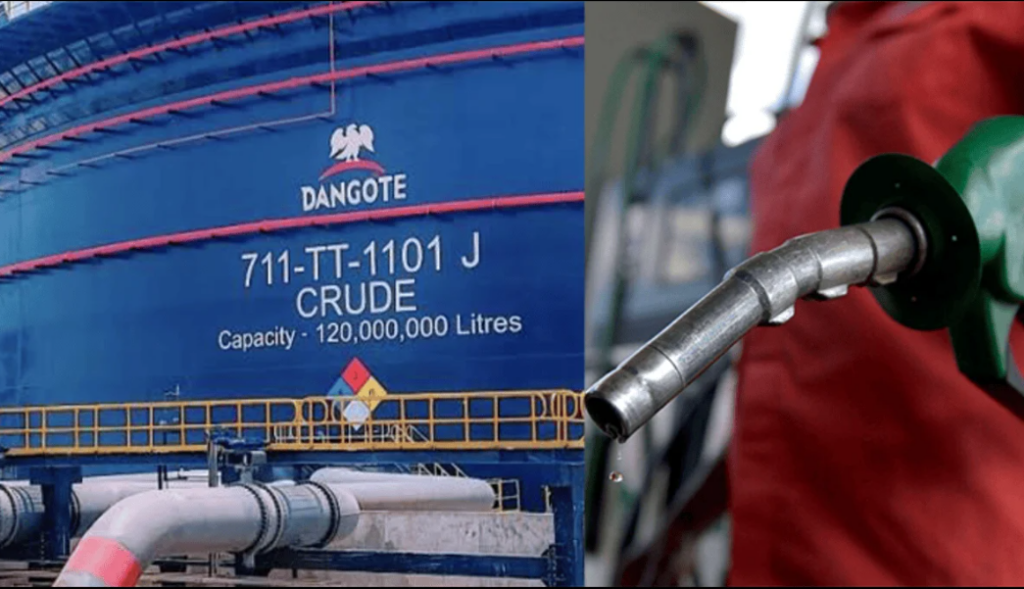
Dangote Refinery has set the price of petrol at $0.779 (₦1,075.77) per litre under a new dollar-based pricing system, which means payments in naira are no longer accepted.
The Dangote Petroleum Refinery has introduced a new pricing system, setting Premium Motor Spirit (petrol) at $0.779 per litre, with updated prices for diesel and aviation fuel as well.
This change comes after the company fully switched to dollar-based transactions, ending naira payments that were part of the Federal Government’s naira-for-crude policy, which began in October 2024.
This move is a major change in the refinery’s business and is likely to affect fuel prices in Nigeria’s deregulated downstream sector, where Dangote is now the main supplier and price setter.
Starting Monday, diesel will cost $1.087 per litre and aviation fuel will be $0.942 per litre. Coastal deliveries of petrol are set at $1,044.62 per metric tonne. The refinery said that prices for Liquefied Petroleum Gas (LPG) will not change.
In a notice to marketers, the company said that all naira-based Proforma Invoices and Deal Recaps for gantry and coastal transactions are now invalid. The Group Commercial Operations team stated that from now on, all payments must be made in U.S. dollars.
The industry sources said the change occurred because crude oil is mostly bought in dollars, while refined products are sold in naira. This mismatch, along with unstable exchange rates and higher global crude prices, created big foreign exchange risks for the refinery.
Officials said Dangote Refinery now gets most of its crude from the Nigerian National Petroleum Company Limited (NNPCL) through dollar contracts, but still sells much of its refined products in naira. The new pricing system aims to align sales with how crude is bought and to reduce the risk of currency fluctuations.
This decision has big effects for petroleum marketers, who depend on Dangote for distribution across Nigeria. Now, retail pump prices will be more directly affected by the naira-to-dollar exchange rate, as well as logistics, regulatory fees, and operating costs.
Earlier, the refinery used naira for transactions as part of the government’s domestic crude supply plan, intended to reduce foreign exchange demand and keep fuel prices steady. But the policy has struggled, and more crude supplies are now being bought with dollars again.
This latest change highlights ongoing foreign exchange problems in Nigeria’s downstream petroleum sector and brings up doubts about how long the naira-for-crude policy can last. As Dangote’s influence grows, its pricing choices will likely have a big impact on fuel costs across the country.