




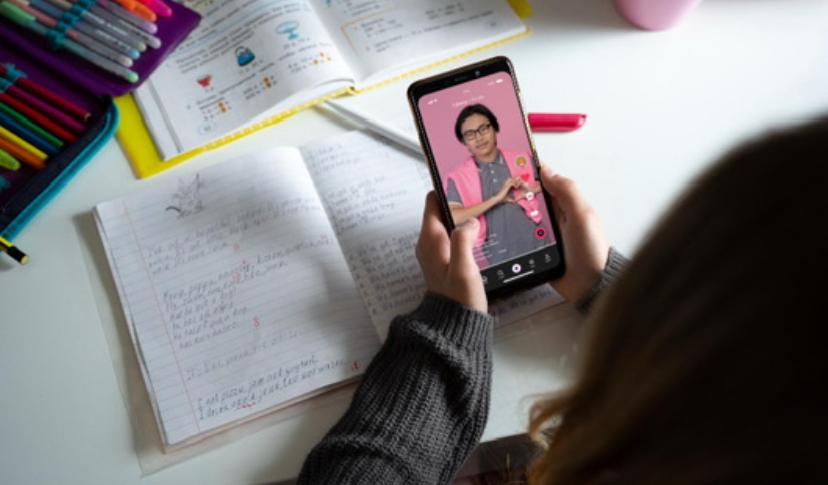
In today’s world, where information can be obtained with just a few taps, society has gained great advantages from social media sites such as TikTok and Facebook.
These platforms, like Facebook and TikTok, have changed the way people learn, communicate, promote their businesses, and share ideas. Students can access educational videos, professionals can build networks, and businesses can contact millions of customers without obstacles.
Under all the entertainment and convenience, there is an increasing worry about the endless scrolling which is gradually taking our attention; what starts off as just a few minutes of watching videos can end up as hours being wasted, harming students’ academic performance and lowering adults’ productivity at work and in their everyday lives.
A student sits down to prepare for an exam and decides to check his phone “just for five minutes”. However, one hour later the textbook is still there while hundreds of short videos on TikTok have been viewed. The only intention was to relax, but the continuous flow of entertainment has cost him valuable time which could have been spent studying.
This is now a frequent occurrence amongst a large number of young people. Because short videos, popular challenges, celebrity updates, and other viral content are always available, a habit has formed, and some students now have difficulty concentrating on reading material that demands patience and deep thinking.
Rather than taking the time to carry out research, read books or go over their notes, many of them end up continually checking their notifications and scrolling through their social media feeds.
The fact that TikTok or Facebook exist is not the issue; the problem lies in the unhealthy relationships that many users have developed with these platforms.
Education demands concentration, discipline, and the capacity for deep thinking. Unfortunately, the overuse of social media has an adverse effect on these vital abilities.
For example, a university student who is working on a research project might decide to spend two hours collecting information from online sources. But once they open Facebook to see some updates or TikTok to watch educational videos, entertaining ones start to appear on the screen. By the time the student realises what has happened, their study plan has been replaced by scrolling.
This routine may result in poor time management, having assignments done hurriedly, less reading, and difficulty concentrating in lectures. Although short educational videos can be useful, they cannot always take the place of the deeper understanding acquired through proper reading and research.
The impact of endless scrolling is not only something that affects students; it also affects adults in various professions.
In many workplaces, employees have their smartphones available all day. Although a worker might check Facebook during a brief break, constant notifications and interesting content can act as a distraction. What should be only a few minutes of rest can quite easily turn into hours of lost productivity.
For instance, an employee who is carrying out a significant task might take the time to watch a popular video or reply to social media posts. Even if this seems harmless, frequent interruptions can decrease concentration, delay the completion of work, and affect performance.
The problem is that social media companies build their platforms to keep users engaged; every video, notification, and update is intended to make people stay online longer.
The habit of endless scrolling can influence the way people deal with information, since short videos offer immediate entertainment and a quick sense of satisfaction, and this might make it more difficult for some people to be patient when engaging in activities that demand a longer attention span, such as reading books, studying or carrying out complex tasks.
A generation which spends more of its time taking in quick content might eventually end up with a diminished sense of appreciation for deep thinking and for meaningful conversations.
Even though there are these concerns, it is necessary to recognise that both TikTok and Facebook have some positive effects. Students use TikTok to pick up new skills, follow educational creators, and learn about career opportunities. Professionals use Facebook to network, promote their businesses, and share useful information.
The way to handle it is not to give up on social media but to cultivate responsible digital habits. People should learn to manage the amount of time they spend on their screens rather than let social media companies control their attention.
Students might create study schedules which involve taking limited breaks from social media. Workers could reduce unnecessary notifications when important tasks are taking place. Moreover, parents and educators can also urge young people to build up better reading habits together with responsible use of technology.
The endless scroll serves as a reminder that technology can improve our lives or turn into a distraction if it is used incorrectly. Although TikTok and Facebook are powerful tools, their value will depend on the way people choose to use them.
The issue now isn’t whether social media is good or bad; the real issue is whether we are in control of our screens or whether our screens are in control of us.
In a world where everyone is vying for our attention, the ability to concentrate, to read, and to think deeply might be one of the most important skills we can acquire. The future will belong not to the ones who spend the most time online, but to those who know when to switch off and use their time wisely.
By Tejiri Edafe