

Explore the implications of the Nigeria military court proceedings against officers alleged to be involved in a coup plot.
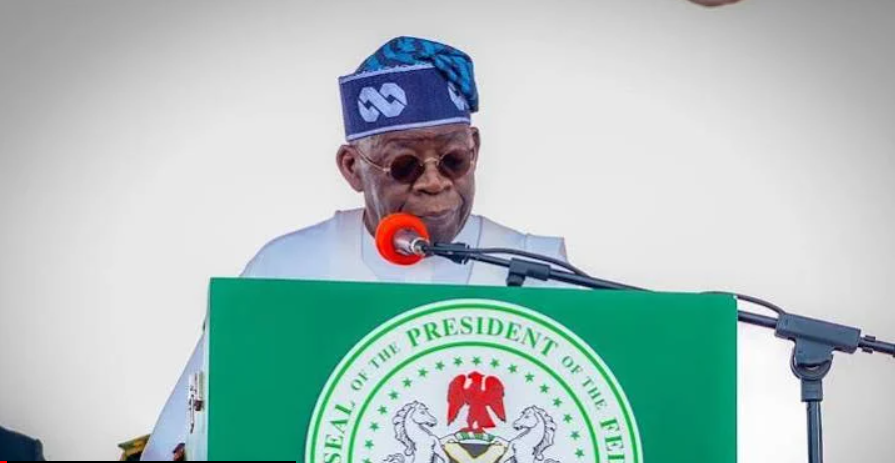
A group of Nigeria military officers is set to face a military court. These officers have been accused of the plot to overthrow the government of Nigerian President Bola Tinubu last year. This information comes from an armed forces statement.
16 Nigerian officers were arrested last October after what were described as “acts of indiscipline and breaches of service regulations”.
At the time, the military dismissed rumours of an attempted coup. Nevertheless, after an investigation, the authorities have acknowledged that some of the 16 will go before a military judicial panel.
Nigeria has a complex history of military involvement in politics. There were multiple coups between 1966 and 1993. This history has made allegations of coup‑plotting highly sensitive.
It is not clear how many of the 16 will go on trial. Nevertheless, the military authorities said the process would guarantee accountability. It will uphold “the principles of fairness and due process”.
A statement was added that trying to unseat an elected government was “inconsistent with the ethics” of the Nigweria military. It also went against their values and professional standards.
Recently, concerns over insecurity, instability, and public frustration have occasionally prompted such rumours about dissent within the ranks. The Nigeria military has repeatedly dismissed these rumours.
Yet, Nigeria as a country has experienced unbroken civilian rule. The Nigeria armed forces have consistently stressed their loyalty to civilian authority. They often issue public statements reaffirming their commitment to democracy.
The latest development shows up at a period when the West African region has undergone a resurgence of coups. Mali, Burkina Faso, Guinea, and Niger have all seen their governments removed by soldiers since the beginning of the decade. Nevertheless, Guinea recently returned to democratic rule with the junta leader, Mamadi Doumbouya, elected president.
These recurring events have created more intense than normal vigilance among governments in the region. This includes Nigeria. Nigeria has traditionally positioned itself as a stabilizing force within the regional grouping Ecowas.
Within the Nigeria military continues to be heightened operational pressures. They face challenges from fighting militant jihadist groups in the north-east. Additionally, they tackle criminals and communal violence across the north‑west and central states.
Analysts say such pressures have put the spotlight on discipline within the armed forces. These pressures are merged with resource constraints. They are also under public scrutiny.