



Explore the recent agreements between Nigeria and the United Kingdom that enhance migration governance and border security.
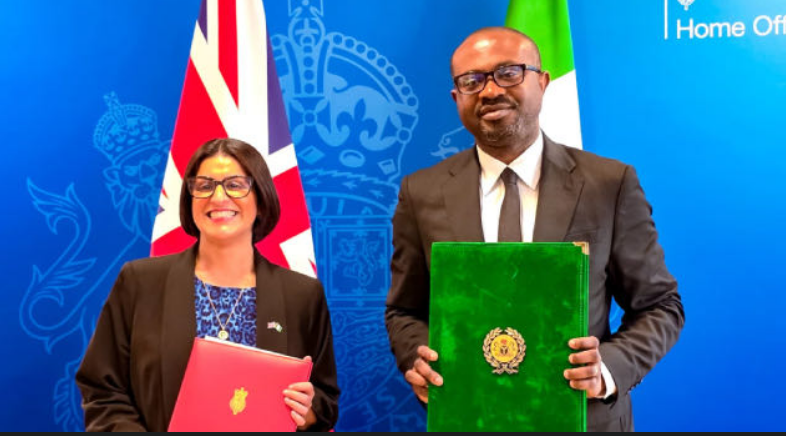
Nigeria and the United Kingdom have signed three major Memoranda of Understanding (MoUs). So these aim at strengthening cooperation on migration governance. They also tackle organised immigration crime and enhance border security. Additionally, they expand business visa opportunities for UK firms operating in Nigeria.
However, the agreements were announced by Nigeria’s Ministry of Interior in a statement released on Thursday via its official X handle. They form part of the ongoing bilateral engagements during President Bola Ahmed Tinubu’s state visit to the UK.
Key Areas of Cooperation
The MoUs cover:
- Migration Partnership: Establishing a transparent, rules-based system that ensures safe and orderly movement of people.
- Border Security & Immigration Crime: Joint efforts to combat abuse of legal migration pathways and strengthen border control mechanisms.
- Business Visas: Expanded access for UK companies investing and operating in Nigeria, aimed at boosting trade and economic mobility.
Minister of Interior Olubunmi Tunji-Ojo described the agreements as a reflection of Nigeria’s commitment. The goal is to build a migration system that is “safe, orderly and mutually beneficial.” He emphasized that the deals would help curb irregular migration while supporting Nigeria’s broader economic ambitions.
“These arrangements support Nigeria’s drive toward a trillion-dollar economy under President Bola Tinubu. They also remove barriers linked to irregular migration,” Tunji-Ojo said.
Signatories and Economic Impact
The agreements were signed with UK Home Secretary Shabana Mahmood and UK Trade Envoy Florence Eshalomi. They mark a significant step forward in Nigeria–UK relations, reinforcing cooperation on migration governance, security, and economic development.
President Tinubu’s visit resulted in a £746 million financing deal. This deal will modernize Lagos ports, including the Lagos Port Complex in Apapa and the Tin Can Island Port. These facilities are central to Nigeria’s maritime economy. They handle a substantial portion of the nation’s cargo traffic. They also serve as vital hubs for customs operations, revenue generation, and trade.
Broader Context
The signing of these MoUs happens during a wave of bilateral engagements. This occurs amid Tinubu’s two-day visit to the UK. It underscores Nigeria’s push to deepen international partnerships. These partnerships align with its economic transformation agenda.
The Migration, security, and trade lie at the heart of these agreements. So, the Nigeria–UK partnership is poised to deliver immediate and long-term benefits. It will strengthen ties between the two nations, while also advancing Nigeria’s economic vision.
Also, the Nigeria’s new migration and trade agreements with the UK will reshape the relationship between the two countries. They may tighten border security and curb irregular migration. The agreements also open doors for expanded business mobility. Experts say the deals may boost Nigeria’s trillion-dollar economy ambitions while also addressing long-standing migration challenges.
What the Agreements Cover
- Migration Partnership: Establishes a transparent, rules-based framework for safe and orderly migration.
- Border Security & Immigration Crime: Joint efforts to combat organised immigration crime and strengthen Nigeria’s border control systems.
- Business Visas: Expanded visa access for UK firms operating in Nigeria, aimed at easing trade and investment.
The MoUs are signed by Nigeria’s Interior Minister Olubunmi Tunji-Ojo. UK Home Secretary Shabana Mahmood and UK Trade Envoy Florence Eshalomi also signed them. These MoUs are part of President Bola Tinubu’s state visit to the UK.
Expert Commentary & Analysis
Migration Governance
- Dr. Ayo Teriba, Economist: Notes that a rules-based migration system could reduce irregular migration, which has strained Nigeria’s international reputation. So, by curbing “abuse of legal pathways,” Nigeria can strengthen its bargaining power in global migration talks.
- Security Analysts: Stress that cooperation on organised immigration crime is vital. So, Nigeria has been a transit hub for irregular migration networks. Enhanced border security could help Nigeria align with international obligations and improve its standing with partners like the EU.
Economic Impact
- Trade Experts: Expanded business visas are expected to ease mobility for UK firms. These visas encourage investment in Nigeria’s energy, tech, and manufacturing sectors. However, aligns with Tinubu’s trillion-dollar economy vision, removing barriers linked to irregular migration and boosting investor confidence.
- Port Modernisation Link: However, the £746 million financing deal to upgrade Lagos ports complements the visa agreements. Efficient ports plus easier business mobility could make Nigeria a more attractive hub for regional trade.
Potential Benefits
- For Nigeria:
- Increased foreign investment through easier business travel.
- Strengthened border security to reduce irregular migration.
- Enhanced credibility in international migration governance.
- For the UK:
- More secure migration pathways.
- Stronger trade ties with Africa’s largest economy.
- Reduced risks of organised immigration crime.
Risks & Challenges
- Implementation Gap: Nigeria has historically struggled with enforcement of migration policies. Without strong institutional capacity, agreements may remain symbolic.
- Balancing Security & Mobility: Stricter border controls could unintentionally slow legitimate travel if not managed carefully.
- Public Perception: Nigerians may view the deals as favoring UK interests. Tangible benefits, like job creation and trade growth, must quickly become visible.
Outlook
However, these agreements mark a strategic pivot in Nigeria–UK relations, blending migration governance with economic development. If effectively implemented, they could help Nigeria reduce irregular migration, attract investment, and modernize trade infrastructure. However, success will depend on Nigeria’s ability to enforce border security measures while ensuring business mobility remains smooth.