


Explore the unusual rainfall in 2026 in Nigeria and how it affects climate patterns and community health.
Nigeria is heading for a season of unusual rainfall patterns. Intense heatwaves are also expected. Climate change experienced in Nigeria has continues to disrupt established weather cycles. Experts have warned about these developments.
They explained that the disruption in the established weather cycles was already clear in parts of Nigeria. In these areas, communities have experienced off-season rains. They have also faced extreme heat and unpredictable weather conditions.
The experts, who spoke exclusively with news men, said these changes also impact flooding, food production, and public health.
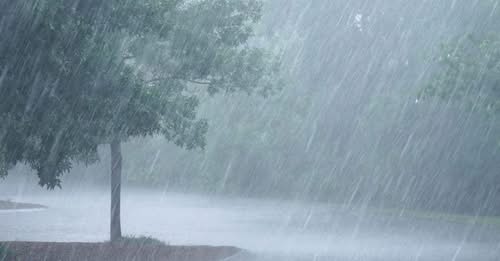
The Director of Environmental Service, Lagos State Primary Healthcare Board, Mr Ahoton James, reacted to the matter. He said that the rainfall in January is unusual. Early February’s rain is also an indicator. It points to the possibility that the country experience unusual rainfall and heatwaves.
This was clear, he said, in the harmattan pattern in December 2025. Many Nigerians do not experience it in January 2026.
“Climate change is happening. As a result, we are no longer capable of predicting climate conditions the way we used to. Rain can now fall at any time.
“We did not experience harmattan last year. And up till this moment, we haven’t seen it. The harmattan we experienced just came one morning in the late January and evaporated in the afternoon. All of these are impacts of what we called climate change,” he said.
He noted that the rising global temperatures are changing rainfall distribution. This alteration leads to heavier downpours in some areas. It also results in prolonged dry spells in others.
“Climate change itself is a result of global warming. When we say global warming, we mean there is an increase in the temperature of the globe. This increase has altered the climate.
“If you also notice last year, there was a serious alteration in the rainfall pattern. The rain fell when we did not expect it. When we expected rainfall, it did not come. In some parts of the country, rainfall did not occur the way it used to. These are all impacts of climate change that we are experiencing,” he said.
With the off-season rainfall, he noted that Nigeria, including Nigerians, should brace up for unusual rain and heat.
“Not only unusual rainfall. We should also expect unusual heat. The temperature is to rise beyond what we consider normal. Additionally, heavier rainfall than what we used to experience is probable.
“Either of these can occur, or both can occur, because climate conditions are no longer predictable. We can’t really predict them again,” he said.
The director of environmental service stated that the weather’s unpredictability caused many outcomes. These outcomes were related to predictions by the Nigerian Meteorological Agency. Weather changes occurred despite different predictions.
“Sometimes you listen to NiMET. They say it is going to be hazy. We can no longer tell it’s going to be rainy, if it’s going to be dry. But you later discover that the NiMET equipment picked the correct data. Yet, what was predicted did not happen. Something else occurred instead.
“So, we are to experience both extreme heat and rainfall. The early warning signs are already here. The heavy rainfall we encountered in January and early February is an early warning sign. Nigerians need to be prepare for heavier rainfall in this year. These signs are already here.
“Another early warning sign is the unusual heat we are already experiencing. We are beginning to get used to it, but it is not normal. It is an early warning sign that extreme heat is coming,” he said.
He, though, urged the government and individuals to guarantee adequate preparedness in mitigating the impact of the weather conditions.
“Flooding will come. It is part of climate change. The question is not whether flooding will occur. Instead, we should ask how prepared we are to make sure that it does not have devastating effects on us.
Also speaking, a public health physician, Prof Adebayo Onajole provided an explanation. He stated that with the situation across the world, the country will experience unusual weather conditions.
“Given what is happening across the world, yes, we experience unusual rainfall in certain areas. We also experience increased dryness in other areas.
“This is the effects of what is refer to as climate variability”. “These changes have direct impacts on atmospheric conditions globally.”
The don noted that both weather conditions have a direct impact on public health.
“Increased rainfall leads to more bodies of water. This usually results in an increase in disease occurrence.
According to him, if there is an expectation of increased rainfall, flooding is expected, and disease outbreaks will follow.
He urged the government and Nigerians to plan to mitigate the impact of climate change.
The President of the Africa Environmental Health Organization, Afolabi Abiodun, spoke. He said the government must up its emergency and disaster response.
Abiodun also urged Nigerians to desist from blocking drainage channels.
“The maintenance of our drainage systems must be carried out to accommodate more volumes of water. Rivers and waterways also need to be properly managed. Flooding has become frequent, and government response has often been inadequate. What is needed is preparedness, clear emergency response plans, proactive infrastructure maintenance, and prompt intervention before disasters occur.
“The Nigeria government must be ready and respond before flooding occurs,” he said. “Practical measures must be in place to protect lives and property. The government must also be ready after flooding events.”