


Explore the details of the Electoral Bill passed by the House of Representatives for future elections in Abuja.
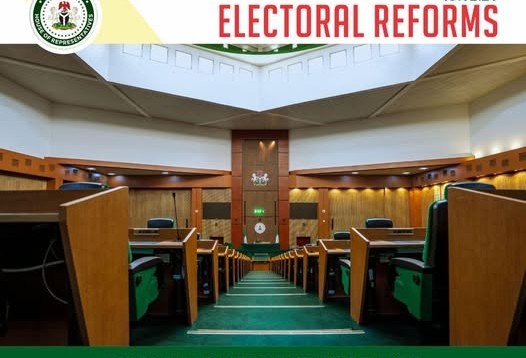
The House of Representatives has passed A Bill for an Act to Repeal the Electoral Bill No. 13, 2022 and Enact the Electoral Act, 2026 (HB. 2479), establishing a modern legal framework for the conduct of federal, state, and area council elections in the Federal Capital Territory, Abuja.
The emergency session reflects the House’s constitutional duty to maintain a coherent electoral system. This duty ensures predictability not only ahead of the 2027 General Elections. It also serves as a lasting foundation for future electoral cycles.
An earlier version of the Electoral Bill was passed in December 2025. The Senate adopted its version earlier this month. A Joint Conference Committee was convened to harmonize differences between both chambers. Following INEC’s release of the electoral timetable, concerns about overlaps with Ramadan and Lenten observances emerged. These concerns prompted the House to introduce extra amendments. The amendments grant INEC clearer statutory authority to adjust schedules lawfully. This ensures the preservation of electoral integrity.
The House rescinded its earlier decision on the 2025 version. This was done according to Order Nine, Rule 1(6) of the Standing Orders. The purpose was to incorporate the Committee’s recommendations alongside new provisions. The harmonization process was inclusive, involving principal officers, legal experts, civil society representatives, and drafting specialists.
The Electoral Bill 2026 builds on the 2022 Act. It addresses ambiguities exposed by recent litigation. It also reinforces safeguards to protect the sanctity of the ballot.
Key Reforms
- Election Funding Certainty: INEC must receive election funds at least one year before a general election.
- Extended Notice Period: Notice of Election will now be issued 300 days before polling.
- Streamlined Candidate Nomination: Candidate list submissions reduced from 180 to 120 days before election day.
- BVAS Codification: The Bimodal Voter Accreditation System is now entrenched in law.
- Mandatory Electronic Transmission: Results (Form EC8A) must be transmitted to IReV, with safeguards for rare failures.
- Stronger Sanctions: Collation infractions now carry a minimum of 10 years’ imprisonment without option of fine.
- Statutory Backing for IReV: The Election Results Viewing Portal receives explicit legal recognition.
- Enhanced Overvoting Controls: Automatic verification at collation centers will cancel results exceeding accredited voter counts.
- Clarified Review Authority: INEC’s seven-day review of declarations made under duress is now precisely defined.
- Digital Party Registers: Parties must maintain verifiable digital membership records.
No legislation can fully satisfy all interests. The Electoral Bill reflects the House’s considered judgment. It is exercised in fidelity to constitutional mandate and parliamentary procedure. Divergent views expressed during plenary are acknowledged as legitimate features of democracy.
The 10th Assembly remains committed to strengthening democratic institutions. It also aims to protect the integrity of the ballot. Furthermore, it seeks to reinforce public confidence in Nigeria’s electoral system.
Signed:
Rep. Akin Rotimi, mnipr Spokesman, House of Representatives